

Curriculum
Examine the Curriculum
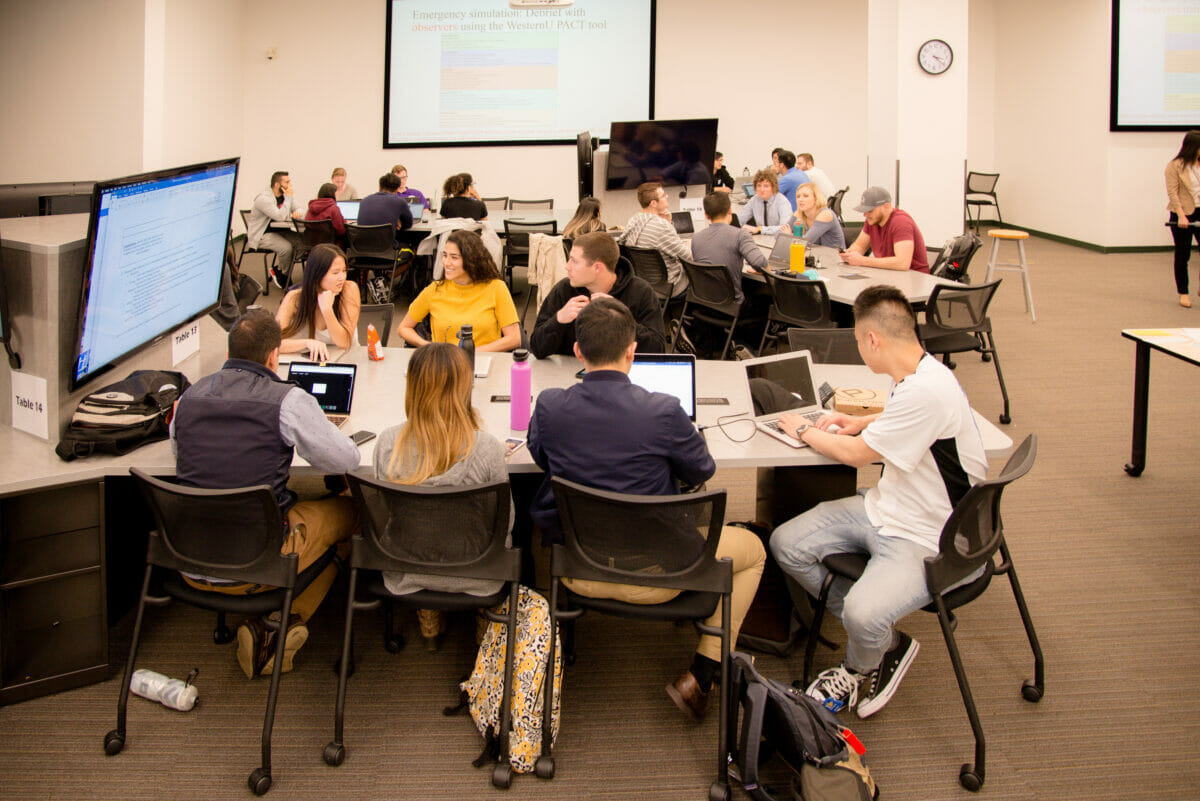
We attribute student success to their motivation, our faculty’s commitment to teaching and learning, and WesternU’s emphasis on early-patient contact.
Our Master of Nursing-Entry program is offered at both our Pomona, CA and Lebanon, OR campuses.
- MSN-E California curriculum (PDF). The curriculum grid appears on page 87.
- MSN-E Oregon curriculum
- The curriculum will include didactic coursework, skills and simulation-based learning, and clinical experiences designed to prepare graduates for entry into professional registered nursing practice. Each semester is 10-17 units and completes in five semesters.
To view the start/end semester dates please visit our Academic Calendar
The MSN Master’s Project
The Master’s Project requires synthesis, integration, and application of knowledge acquired throughout the MSN program. Specifically, this requires development of a clinical improvement initiative offering valuable insights into complex health care issues while highlighting contributions Master’s prepared nurses can make in the delivery of healthcare.
During Master’s Project, the student will conduct a needs assessment to identify a health care issue requiring outcomes improvement. Students will develop a proposal and scripted outline for interventions designed to improve the health outcomes based upon the needs assessment. Progressive development of the project will be accomplished through the application of all Level 1 Essentials.
Clinical experience
One of the most valuable components of our program is our partnership with various local healthcare organizations that offer unique opportunities for our students to apply, develop, and integrate knowledge and skills learned in the classroom.
Students in the Master of Science in Nursing Entry (MSN-E) program will complete program required clinical hours that meet the California and Oregon Board of Registered Nursing regulations. Students will be assigned to clinical facilities and to a clinical faculty member and will complete clinical experience hours at our partner acute care hospitals, behavior health and community health clinics. Clinical experiences will begin in the first semester of the program.
Simulated Patient Experiences in the Nursing Simulation Center
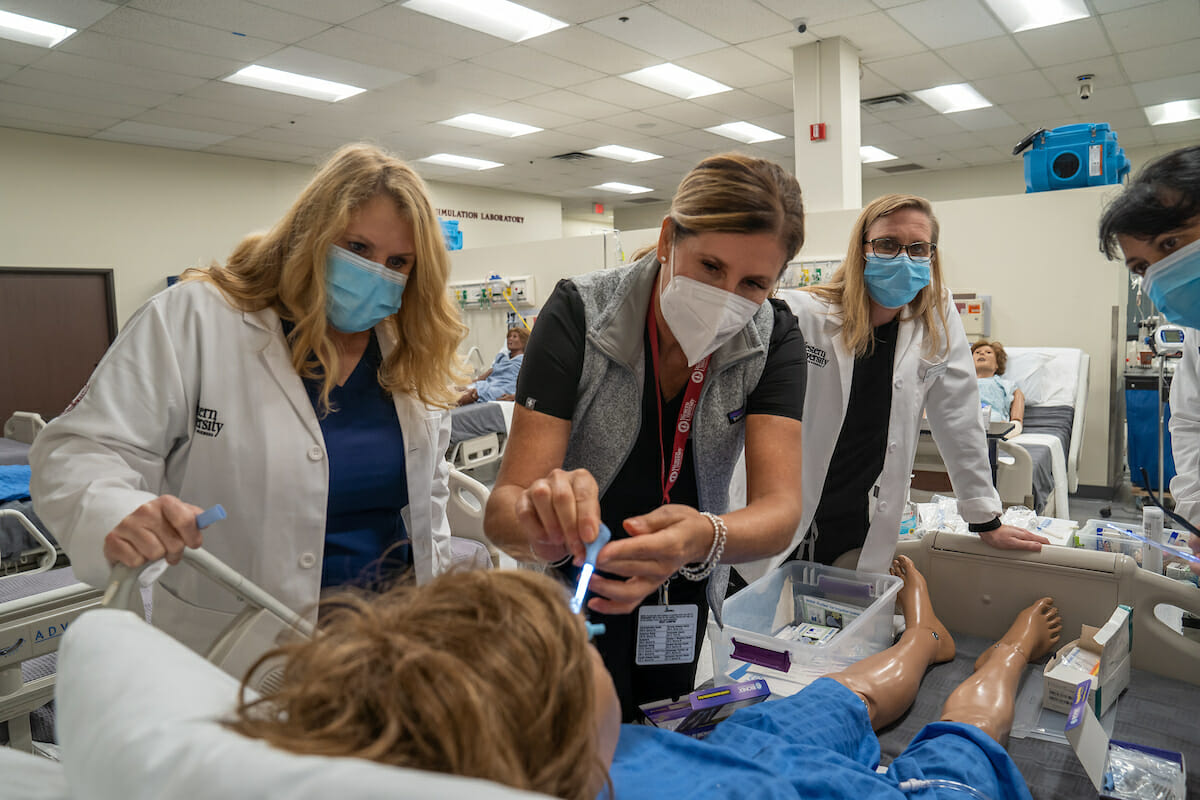
Clinical experience in the high-fidelity simulated patient skills laboratories at each campus enables you to apply what you’re learning in class to simulated patient scenarios.
These nursing simulation experiences offer you an opportunity to develop your critical thinking abilities, demonstrate your mastery of skills, and observe outcomes of computer-programmed “breathing,” “heart-beating” mannequins, while faculty provide feedback on your work.
Real Patient Clinical Experiences
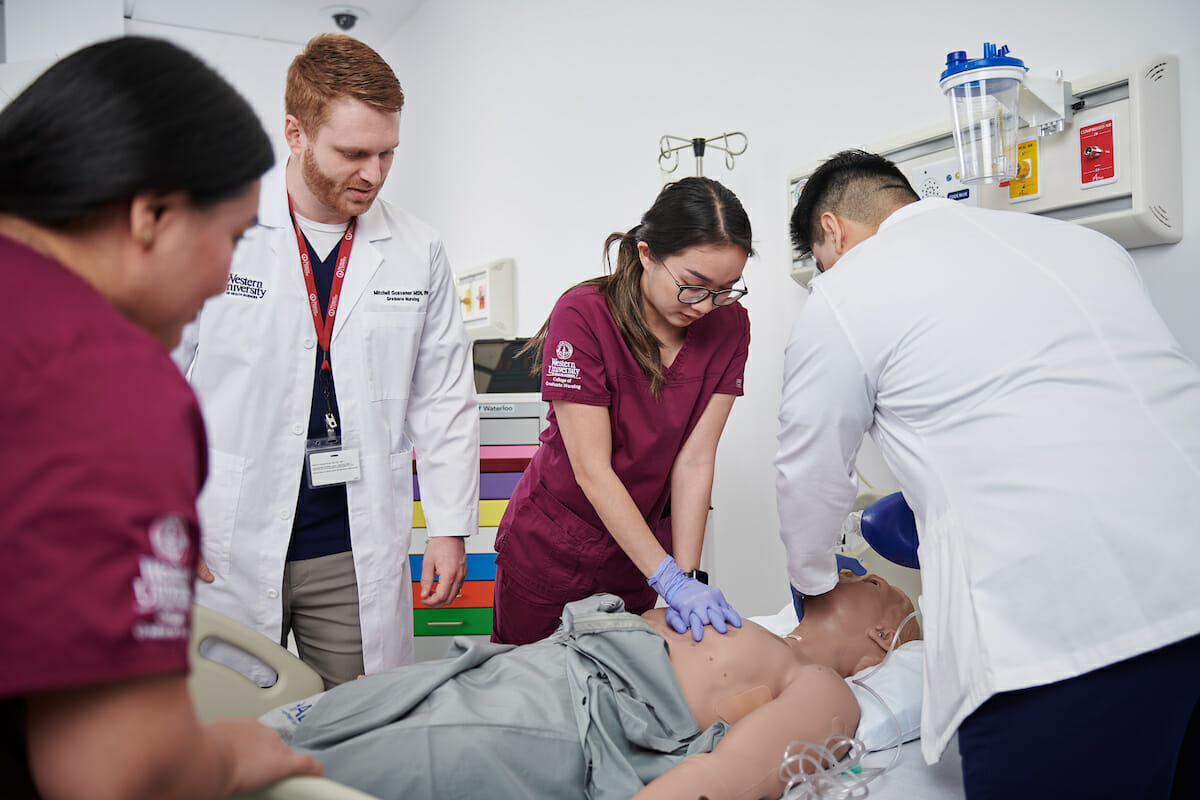
During your clinical experiences you will also have real patient contact concurrent with your didactic coursework. This is one of the reasons our students experience such high pass rates on the RN licensure examination. These experiences occur in a variety of settings, including acute-care hospitals, sub-acute nursing care facilities, community-health and public health organizations.
Community outreach
The faculty and students of the College of Graduate Nursing continue to be the champions for healthy communities. We believe that through community engagement, we will have a positive impact on health and well-being of community members. Opportunities exist through student organizations and clubs, volunteering, and in curriculum such as Community Health Nursing.
Our presence in both states is rooted in service, respect, and community connection. We are devoted to showing up with purpose and integrity, with the aim of being an asset and a blessing to those who live and work around us.
Learn Alongside Students in Other Health Professions
WesternU’s interprofessional curriculum provides a forum for you to collaborate and learn from students in eight other health-care programs. This curriculum provides an opportunity for early networking with other health professionals and ultimately prepares you to better serve your patients through interprofessional collaboration and referrals.
Academic Support and Facilities
Caring about students and helping them achieve success is the hallmark of all WesternU faculty. Our nursing faculty are respected practitioners and scholars who keep pace with the latest teaching techniques and technology and are committed to helping you master the material.
The Office of Learning Enhancement & Academic Development Office (LEAD) is another resource for on-campus and prospective students. LEAD helps students connect academic success with wellbeing. In individual counseling sessions, students learn time management, test taking, and studying strategies. LEAD facilitates training in managing stress, increasing focus, and professional skills. Also, LEAD offers academic writing support including review of APA formatting for scholarly papers.
The College of Graduate Nursing faculty and staff are also a great resource when it comes to everyday student support.
The Harriet K. and Philip Pumerantz Library and Bookstore support students with textbook and academic research needs, while the Computing Resources/Information Technology staff are available to provide you with critical technical support. Electronic databases are available both on-campus and off-campus through the Library’s e-resources page.
WesternU is located at two campuses in Pomona, CA and Lebanon, OR with multiple colleges of graduate health sciences operating at each.